The Ranchers Beginner's Guide: Your First Week on the Ranch
Your first 30 minutes
- Follow the opening quest and answer tutorial phone calls. They introduce the ranch, driving, shops, crafting and fields; use the smartphone guide below when the phone opens.
- Mark three places: Leafy Market for seeds, CashIn for crop settlement, and the nearest legal overnight parking spot for your vehicle.
- Plant a small test plot. Record seed cost and planting day instead of spending all your cash on an unmeasured crop.
- Use the CashIn chest, then collect the payment next day. Deposits do not pay immediately; the current-build tutorial explicitly says payment arrives the next day.
- Stop and use a focused fix when blocked: roof quest, missing vehicle, chicken care, or Gigi's large egg.
Before starting: mode and transport
Check the build only when troubleshooting. This guide is reviewed for 0.8.10.842. Solo can use Steam Offline Mode; co-op still needs Steam sign-in and internet.
Follow the opening questline. It introduces the ranch, first fields, seed buying, early home crafting, villagers, shops, and driving. First-use tutorials appear when you attempt a new mechanic.
Learn transport before expanding. Sunvale has 15 subway stations. Roped or attached animals can travel with you, and selected quest drives can include passengers and animals.
Use the vehicles guide for parking, impound and recovery steps.
Protect your vehicle. Park at your ranch or one of 17 Overnight Parking locations. Otherwise it may be impounded. My Garage can send damaged or stuck vehicles to a mechanic and route them back through a Car Pound.
Your first 7 days: a day-by-day roadmap
The opening should establish orientation and a maintainable routine. The sequence below is editorial advice built around current official systems, not a claim that one crop or purchase has already been mathematically solved.
Day 1 — Scout, don't spend
Follow the main quest until the ranch, driving, shops, and first-use tutorials are clear. Mark the nearest subway and legal overnight parking. Delay large purchases until you understand the route between ranch and town.
Day 2 — Plant your first money loop
Use a small plot to learn the current plantation loop. Record the seed cost, planting day, harvest day, yield, quality, and sale channel. The official notes confirm that unharvested produce remains and recurring crops have a regrow flow.
Day 3 — Follow the quest threads
Continue the main quest and first-use tutorials. Failed quests can be replayed with state resets, so learning a mechanic is safer than abandoning the questline to chase an assumed optimal route.
Day 4 — Start a second skill
Explore one secondary activity that is available in your current build, but do not plan around roadmap systems. The developer lists mines, combat, monsters, wildlife, and hunting as future content rather than launch features.
Day 5 — First harvest, first reinvestment
When the first crop is ready, record its yield, quality and available sale values before deciding what to keep. Protect the exact cost of repeating the crop cycle; use only the surplus for expansion or experiments.
Day 6 — Expand the plot, meet the town
Clear a second field only if the first remains manageable. Make one deliberate town loop for daily orders and shops. Record useful routes, but do not assume unverified gifts, discounts or relationship rewards.
Day 7 — Plan your first animal purchase
End the week by doing math, not shopping. Check what your crops actually earned per day in your save. Before buying an animal, record its housing, feed and tool requirements; delay the purchase if those costs are still unknown.
Quest milestones: follow objectives, not fixed days
Your save can progress at a different pace from a recorded playthrough. Use the quest tracker or quest database for named objectives instead of treating old day numbers as a schedule.
Older 0.8.10.455 playthrough milestones
Video-observed One save showed Feathered Foes on Day 4, Rust to Rumbling! on Day 5 and Power to the Bench on Day 8. Those days describe that save only.
- Rust to Rumbling! Hold 3,000C, repair Victor's old car, use a Bykii bike meanwhile, then collect the car.
- Power to the Bench. Hold 1,000C, visit City Hall, sign with Victor, build the workbench and check ranch energy use.
- Phone tutorials. Meriam's workbench instructions arrived by phone, so answer tutorial calls when a step is unclear.
- Long gathering sessions. The same footage showed health loss after heavy work; the exact trigger and rate remain unverified.
Resource priorities: what matters first
With limited money, energy, and daylight, the order you invest in things matters more than the things themselves. Our recommended priority stack for the first month:
- Time-saving infrastructure. Anything that reduces walking, watering, or inventory trips pays for itself every single day. A well-placed chest or a closer field layout is worth more than a shinier tool.
- Seed capital. Money that becomes more money within one crop cycle outranks everything except survival purchases.
- Tool upgrades. Compare the displayed or observed effect before buying. Prioritize an upgrade only when it removes a real daily bottleneck.
- Animals. Only once crops cover upkeep with margin.
- Decorations and cosmetics. Buy them after essentials unless decorating is your main goal.
When to expand the ranch
Expand when the routine you already have is repeatable, not simply because a new building is available. This is editorial guidance for a fresh save, not a required progression order.
- Prove one loop. Complete one crop or animal-care cycle and write down its real inputs, time cost and result in your save.
- Protect the next cycle. Keep enough money, feed and materials to repeat that routine before spending the surplus on a new system.
- Remove one bottleneck. Expand storage, fields, transport or animal housing only when you can name the daily problem it removes.
- Re-check after an update. Early Access fixes can change the correct diagnosis, so compare the title-screen build and current source notes before copying an old route.
Known gameplay systems, explained
Official material establishes the broad pillars below. Practical suggestions are editorial advice; exact energy costs, crop restrictions, upgrade effects and relationship rewards require current-build observations.
Energy and time
Watch the current build's clock and player-status UI before planning a full day. Record which actions consume time or energy, then put mandatory chores first and leave a travel buffer for town errands.
Official Pre-EA Ranching v2 notes say a new day begins only after selecting Start new day on the daily summary. They also describe that screen as a pause point in multiplayer.
This behavior has not been independently rechecked in 0.8.10.842. Test it once in your own save before relying on it.
Tools and upgrades
The opening quest and first-use tutorials introduce available tools. Check the current description and test the effect before spending; do not assume undocumented tiers, energy savings or unlock conditions.
Seasons and crops
The 0.8.10.842 files contain 11 seasonal configurations. 9 have a Town Seed Vendor reference; Marrow and Leek do not. The crop database lists their season, growth and regrow settings.
Configuration does not prove current shop stock, retail price or season-boundary behavior. Check the live listing before buying a large batch.
Town, NPCs, and relationships
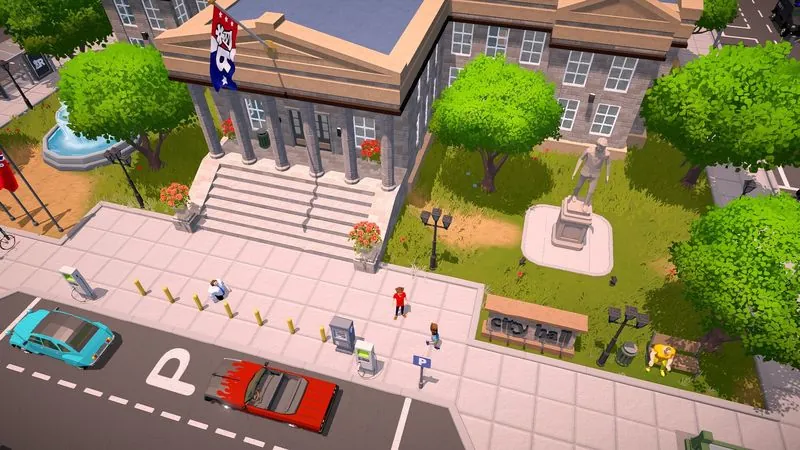
The official material confirms shops, daily orders, local markets, quests, and resident interactions. Record actual opening hours and requirements instead of assuming gifts, discounts, or birthday multipliers that have not been verified.
Where to look for seeds: 0.8.10.455 footage showed Leafy Market tabs for Seed & Fertilizer, Vegetables, Grocery and Weaponry (Temporary). Seeds and fertilizer were on the first tab.
Video-observed This identifies the menu, not current stock or a complete price list.
Building and ranch expansion
Current references cover house parts, animal facilities, fences, sprinklers, greenhouses and utilities. Check the building guide for materials, then verify any still-unknown unlock condition in your save.
Co-op
The game supports 1–4 player online co-op. Steam sign-in and internet are required. If joining fails, first confirm that every player is on the same build; the 0.8.10.455 join fix is historical context.
The 10 most common beginner mistakes
This list is editorial strategy built on the confirmed systems above, not a set of verified mechanics. Where the underlying behavior still needs current-build evidence, the item says so.
- Buying animals before you can feed them. The animal, its housing, and its daily upkeep are all likely to cost money before it produces anything. Until upkeep costs are observed in your build, fund livestock from surplus, not hope.
- Ignoring the configured season. The database now lists 11 current-build seasonal profiles. Check the live seed listing too, because configuration alone does not prove current stock or boundary behavior.
- Hoarding harvests. Produce sitting in a chest is not earning anything; the editorial advice is to sell, reinvest, repeat — though exact spoilage or storage rules need current-build checks.
- Skipping the quests. The opening quest introduces core locations and mechanics, and failed quests can be replayed with an automatic state reset.
- Overplanting your watering capacity. Whether under-watered crops grow slower in the current build is unverified; until you have observed the watering rule, scale planting to what your morning routine can actually tend.
- Guessing a crop's sell price. CashIn settlement combines crop income into one Farming total. Do not turn that aggregate into a per-crop price without an isolated sale test.
- Upgrading the wrong tool first. Upgrade what you use every day, not what looks coolest.
- Running out of energy at noon. Older 0.8.10.455 footage showed health loss after heavy work Video-observed. The trigger is unverified, so watch both bars and carry food.
- Neglecting the town. Editorial strategy: relationship rewards are not yet documented in the current build, but meeting NPCs early costs little and quests already route through them — Victor (the Mayor) gates the electricity contract Video-observed.
- Expanding before stabilizing. One boring, reliable income loop beats three exciting half-built ones. Grow what works until it's automatic, then diversify.
Beginner FAQ
What's the very first thing I should do in The Ranchers?
Follow the opening quest, answer tutorial calls, mark Leafy Market, CashIn and legal parking, then start a small crop test. Check the build number only when troubleshooting.
Should I play solo or in co-op first?
Both are fully supported. Solo teaches you the systems at your own pace; co-op (1–4 players) multiplies your labor but adds coordination overhead. If your group is new, have everyone skim this guide and the co-op guide first.
How do I make money fast at the start?
Keep the materials needed for your next quest or build, then sell surplus resources or a ready harvest. Use CashIn if you can wait until the next day; check Leafy Market if you need cash sooner. Follow the selling and payment guide.
When should I buy my first animal?
After you have observed the full purchase, housing, feed and care cost and can cover it without interrupting your current production. Use the profit calculator with your own values.
Do seasons really matter?
Yes. The current build contains 11 seasonal crop configurations, but those records do not prove live shop stock or season-boundary behavior. Check the seed listing and test a small batch.
Is this guide based on the final game?
It covers the live Early Access game through version 0.8.10.842. Some observed numbers remain labeled 0.8.10.455 because that is the exact build shown in the retained source footage; systems can change during Early Access.
Why is my electricity not paying out?
The contract alone does not prove the payout path works. Check the contract, current meter or usage state, and the surplus-selling step in the electricity guide.
The exact activation and payout sequence remains an open evidence item.
Why is an animal not producing?
Start with the animal troubleshooting checklist. Separate a care problem from a disappearance report, and confirm 0.8.10.842 or later before applying an older workaround.
Why is a crop not growing?
Record the seed, planting day, crop stage, weather and watering state, then compare the current farming guide. Do not treat an unverified fertilizer or season assumption as a confirmed rule.
Why can I not use or place a building?
Check the displayed recipe and placement context in the building guide. If the objective itself is not recognized, use the roof quest troubleshooting page instead of repeatedly rebuilding.
Why can my friend not join?
Compare both title-screen builds first, then follow the co-op join checklist. The 0.8.10.455 launch fix is historical context; a current failure needs its own platform, session and network details.
Can I drive another player's car?
Current official material does not confirm that every player can freely drive another player's owned vehicle. Treat owned cars and quest vehicles as separate cases.
Check My Garage, the current objective and the build before calling it a bug. The vehicles guide keeps the evidence boundary.
Related guides
Start here, then go deeper on the system you are working on this week.
Getting started
- Beginner Mistakes — 12 first-week traps that slow new ranches down, with a quick checklist.
- Controls & Camera Settings — key mappings, camera defaults and motion-sickness tips.
- Multiplayer & Co-op Guide — role splits and schedules for 1–4 player ranches.
- Release-Time Checklist — what to check when a new patch lands before you trust old advice.
Core systems
- Farming & Fields — watering, harvest, regrow and fertilizer rules with labeled evidence.
- Animal Care — delivery, daily feeding, water, fencing and egg production for every ranch animal.
- Building & Placement — construction scope, blueprints and placement reports.
- Crafting & Recipes — workstations, recipes and processing chains with source boundaries.
- Electricity & Water — contracts, self-built supply, and selling surplus power.
- Vehicles & Transport — driving, parking, impound recovery and fast-travel stations.
- Resources & Materials — where to get wood, stone, hay, iron and other basics.
Database
- Crop Database — seasons, growth, regrow and observed prices, separated by evidence type.
- Animal Database — products, cycles and care requirements for every species.
- Materials Database — current acquisition routes, sources and unverified entries.
- Customization Database — buildings, decor and appearance options.
- NPC Database — Victor, Angela, Gigi: services, quests and map links.
- Quest Database — quest chains, objectives and evidence status.
When something goes wrong
- Roof Quest Stuck? — fixes for the tutorial building quest that will not complete.
- Gigi's Large Egg Quest — how to push the chicken-coop quest forward.
- Vehicle Missing or Impounded — My Garage, Car Pound and recovery steps.
- Offline Mode Won't Load — build-specific fixes for the loading screen.
- Can't Join Friend Session — co-op connection troubleshooting.
- Fast Travel & Subway — how the 15 stations work and common errors.
Tools & reference
- Profit Calculator — rank any crop or animal by profit per in-game day.
- Ranch Checklist — daily and weekly tasks to keep the ranch running.
- Quest Tracker — log objectives and mark what is blocking progress.
- Chicken Troubleshooter — diagnose why chickens stop laying or disappear.
- Interactive Map — Leafy Market, CashIn, parking spots and key locations.
- Update Impact Notes — what the latest hotfix changes for existing advice.
Money & progression
- Selling & Money Guide — choose where to sell, check the payment and plan your next purchase.
- Police Wanted Levels — what 1–5 stars mean before you get creative with the law.
Sources
- Official Steam news — launch hotfix, quest, plantation, transport, and quality-of-life notes.
- Official Steam store page — current Early Access scope and feature overview.
- Games Station gameplay footage (V0.8.10.455) — source of the video-observed quest chains above, reviewed August 7, 2026.
How saving, sleep and fainting work
Short answer: Sleep in a tent, bed, motel or motorhome before 3 a.m. Sleeping saves progress and restores health and energy; the amount depends on sleep quality.
- Choose a sleep point: Use a tent, bed, motel or an eligible vehicle such as a motorhome.
- Save before the cutoff: Sleeping saves progress. Staying awake past 3 a.m. makes the player faint.
- Watch both status bars: Reaching 0 energy or 0 health can cause fainting or death.
- Recover after a collapse: After fainting or death, the player respawns at the nearest hospital and pays a fee.
Game files The source does not state the hospital fee, exact restoration values, or which individual beds and vehicles are currently usable. Checked against 0.8.10.842.
Smartphone: open it and use the core apps
Short answer: Click the icon at the bottom left to open the smartphone at any time. Its apps cover local messages, map navigation, pausing and exiting; more apps unlock as you settle in and explore.
- Open the phone: Click the smartphone icon at the bottom left. The tutorial says this opens the phone at any time.
- Read messages and navigate: Use the phone apps to read messages from locals, or open the Map app to navigate Ranchers Country.
- Pause or exit: The phone also has the appropriate apps for pausing or exiting the game.
- Unlock more apps: New apps unlock as you settle into Ranchers Country and explore more of its world.
Apps matched to active icons in this build
Messages
Navigation & planning
Ranch tools
System controls
Map controls: Center the map · Place a landmark · Remove marker. Mapping is unavailable due to a weak GPS signal.
Game files The source does not provide a complete app list, exact unlock order or timing, alternative button bindings, or independent runtime availability for every app. An active serialized app icon and a matching localized label prove current-build UI configuration, not unlock timing or independent runtime availability. Book and Store remain unmatched label candidates. Checked against 0.8.10.842.